Lavaggi e processi
Washes,
and what they cost you.
This page is the reference behind every figure on every product page: how the six washes are produced, how transfer is measured, what shrinks and by how much, and the one process we refuse to buy.
Indigo transfer, and how it is graded
Indigo is a surface dye. It does not penetrate the cotton fibre the way most dyes do — it wraps around the outside of the yarn in layers. That is what makes denim fade beautifully, and it is also what makes a new dark pair leave blue on a cream sofa, on a tan bag, on the lining of pale shoes and on your hands.
We measure it under ISO 105-X12: a standard white cotton cloth is rubbed across the fabric ten times, dry and then again wet, and the stain picked up is read against a grey scale from 1 to 5. Five means almost nothing came off. One means a great deal did.
The grade appears on the product page, on the matrix cell, on the line in your bag and again on the checkout page. If a product record has no grade and no named test method, our own publication checks refuse to render it — it cannot go on sale at all.
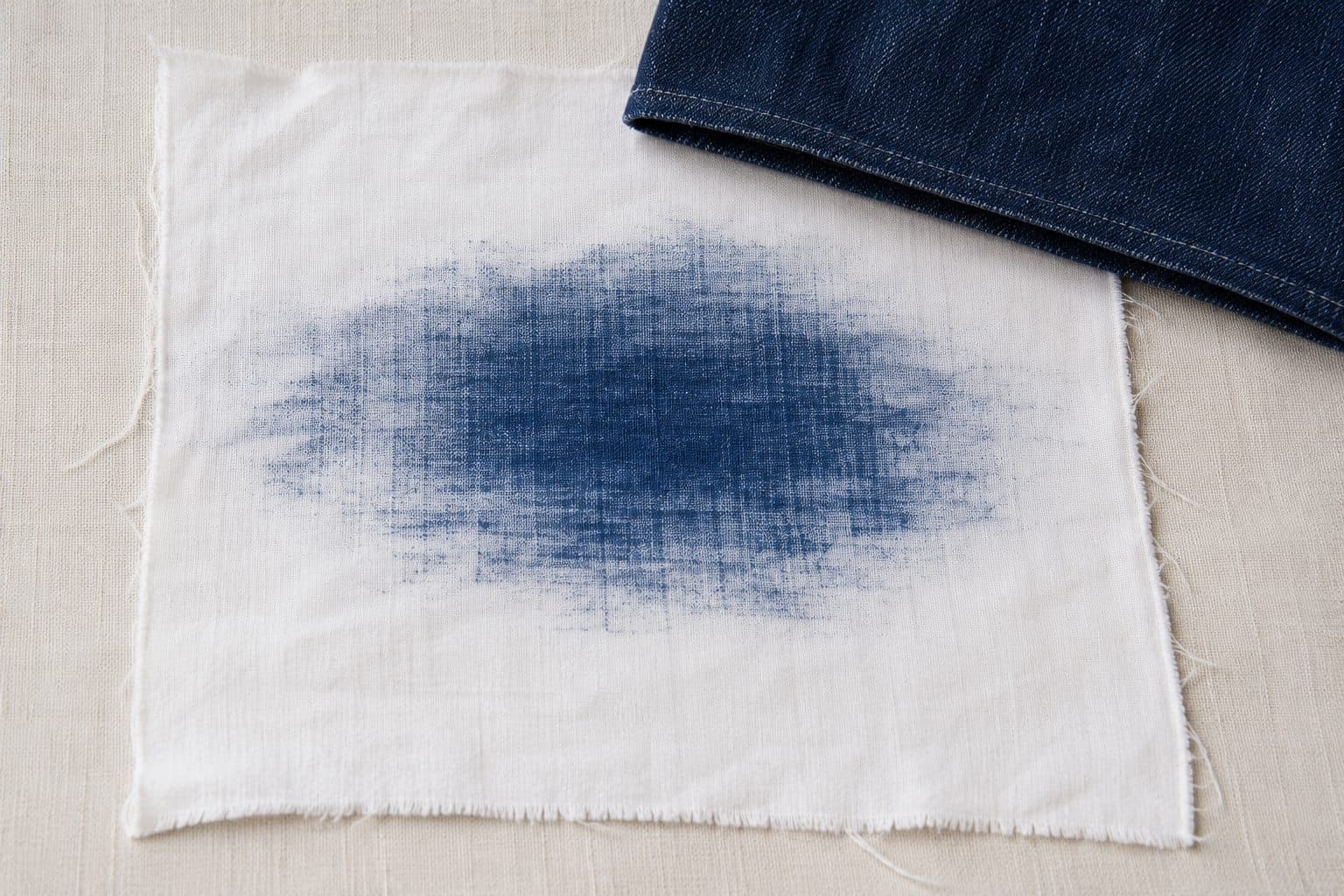
Grade 1–2
Will transfer indigo onto light fabrics, bags and skin. Wash separately, and don't sit on a cream sofa in these for the first month.
Grade 3
Some transfer in the first few wears, mainly when damp.
Grade 4–5
Minimal transfer expected.
Transfer is not a fault, provided we told you first
Indigo migrating from a dark garment is an inherent characteristic of the dye, not a defect in the goods — but only where the grade has been disclosed before purchase, which is why we disclose it in four places. Where a grade has not been disclosed, we do not rely on this position at all. The same applies to shrinkage on unwashed cloth: it is inherent behaviour where the expected figures were published, and nothing else. Your statutory rights under the two-year legal guarantee of conformity are unaffected.
The six washes
Rinse
transfer grade 2/5 · 8 styles
Dyed, then rinsed once to take the loom finish off. Nothing else was done to it, which is why it is the darkest thing we sell and the one that transfers most.
Mid
transfer grade 3/5 · 13 styles
A measured wash that opens the twill and drops the indigo about two shades. This is the blue most people picture when they say jeans.
Light
transfer grade 4/5 · 4 styles
Longer wash, softer hand, most of the surface indigo already gone. Very little is left to rub off, and very little is left to fade.
Black
transfer grade 2/5 · 2 styles
Not indigo. A sulphur black dye that greys down over time rather than going pale blue. It marks light fabric in its own way for the first few wears.
Ecru
transfer grade 5/5 · 2 styles
The same cotton, never taken to the dye vat. There is no indigo in it at all, so there is nothing to transfer and nothing to lose.
Raw
transfer grade 1/5 · 8 styles
Straight off the loom and never washed. It is stiff, it is a full size long, it shrinks when you wash it, and the fade pattern that ends up on it will be yours.
Shrinkage, in figures
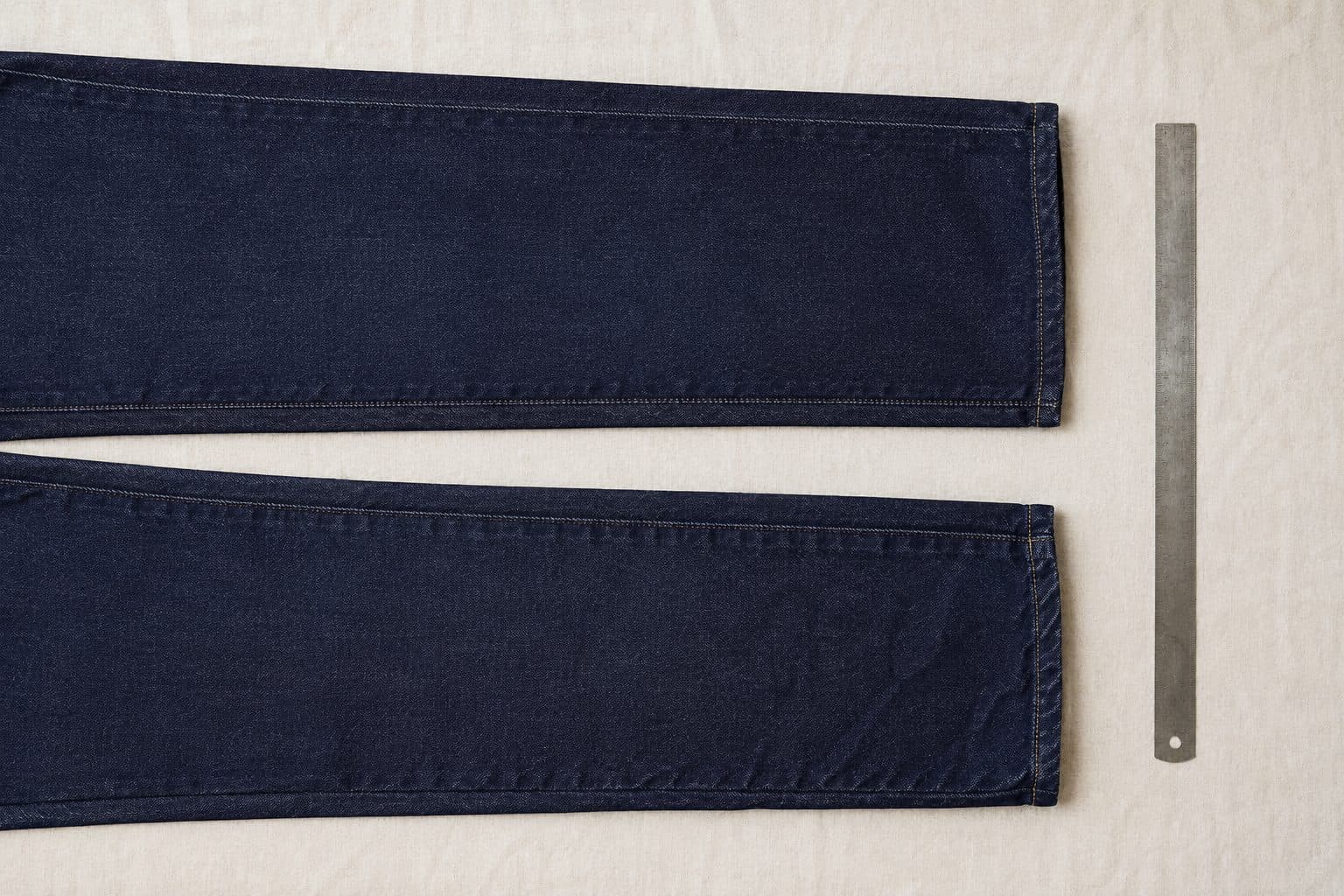
Pre-washed styles have already lost most of what they were going to lose; each states its residual figure. Unwashed styles have lost nothing yet, so both directions are published before you buy.
| Style | Weight | Length | Waist | Shrink-to-fit |
|---|---|---|---|---|
| Raw Straight 13ozD-01 | 13 oz | −4% | −2.5% | Yes |
| Raw Slim 13ozD-02 | 13 oz | −4% | −2.5% | Yes |
| Raw Straight 14ozD-03 | 14 oz | −4.5% | −3% | Yes |
| Raw Straight 16ozD-04 | 16 oz | −5% | −3% | Yes |
| Raw Tapered 14ozD-05 | 14 oz | −4.5% | −3% | Yes |
| Raw Wide 15ozD-06 | 15 oz | −5% | −3% | Yes |
| Raw Straight 21ozD-07 | 21 oz | −5% | −3% | Yes |
| Type III Jacket 14ozE-07 | 14 oz | −3.5% | −2.5% | Yes |
Elastane and how the waist behaves
Anything with elastane in it opens at the waist over a few hours of wear. That is the fibre doing its job, not the garment failing. We publish how far, per style, and what happens after a wash.
We do not say that elastane returns a garment to its original measurements exactly, because over enough cycles it does not. What we say is what we have measured: it comes back to the published waist after a cold wash and a flat air dry, and it will drift over the life of the garment.
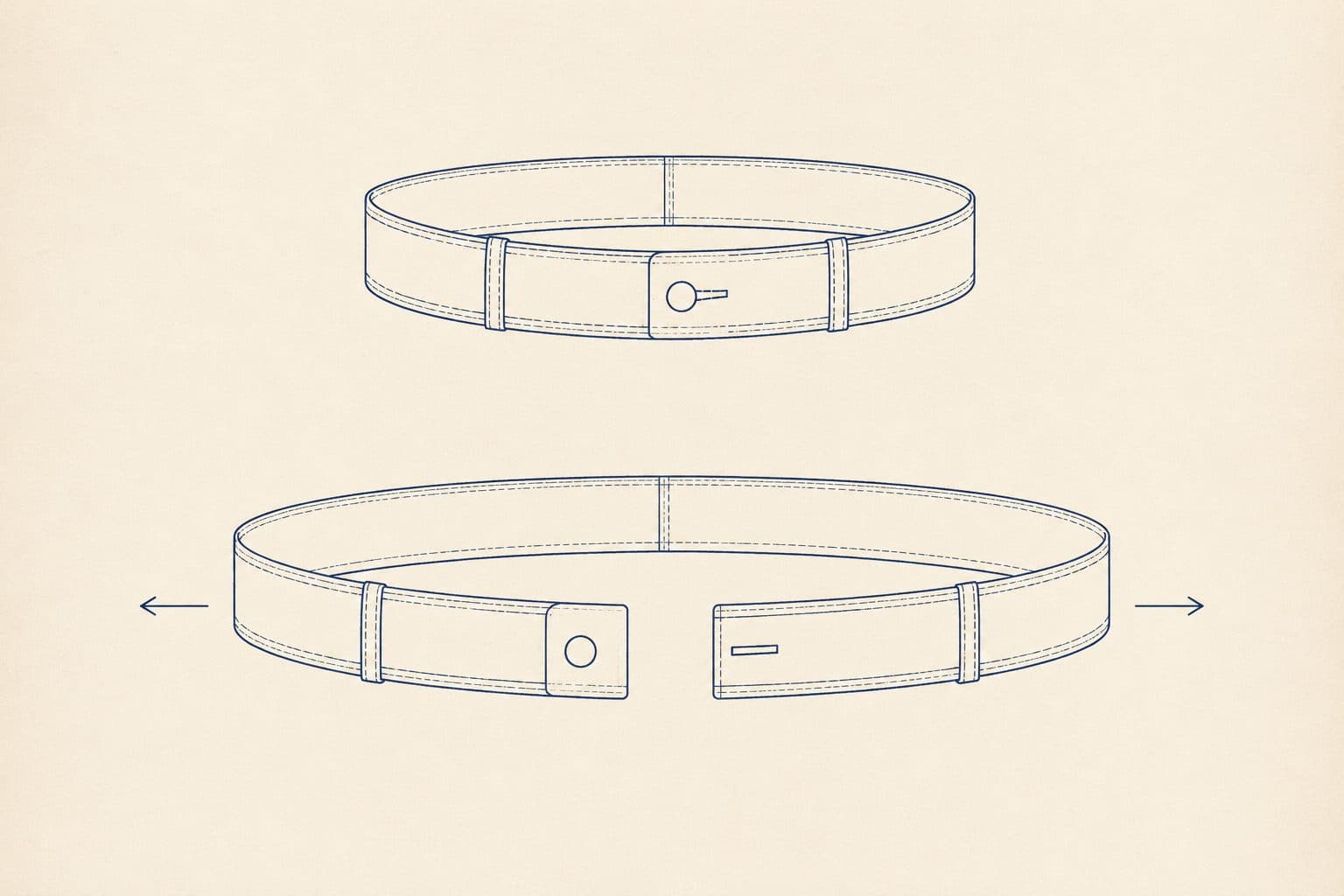
| Style | Elastane | Waist opens by |
|---|---|---|
| Straight Stretch 1%A-05 | 1% | 2 cm |
| Straight Stretch 2%A-06 | 2% | 2.5 cm |
| Slim Mid StretchB-02 | 2% | 2.5 cm |
| Slim Light StretchB-03 | 2% | 2.5 cm |
| Slim Black StretchB-04 | 2% | 2.5 cm |
| Tapered StretchB-06 | 1% | 2 cm |
| Skinny Stretch 3%B-07 | 3% | 3 cm |
| Stretch SetF-03 | 2% | 2.5 cm |
A process we do not use
Nothing sold here has been sandblasted.
Sandblasting means firing abrasive grit at denim under pressure to produce a worn look in seconds. It fills the air of the workshop with crystalline silica. Workers who breathe it develop silicosis, an incurable and frequently fatal lung disease, sometimes within a few years of exposure. The process is prohibited in the European Union.
We do not buy it, at any price, from any supplier. Every product record on this site carries a mandatory abrasion field, and a record naming a blasting process cannot be published — the check runs before the page is built, not after somebody complains.
Where a garment has been abraded, it says which of four processes was used. Where it has not been abraded at all, it says that instead.
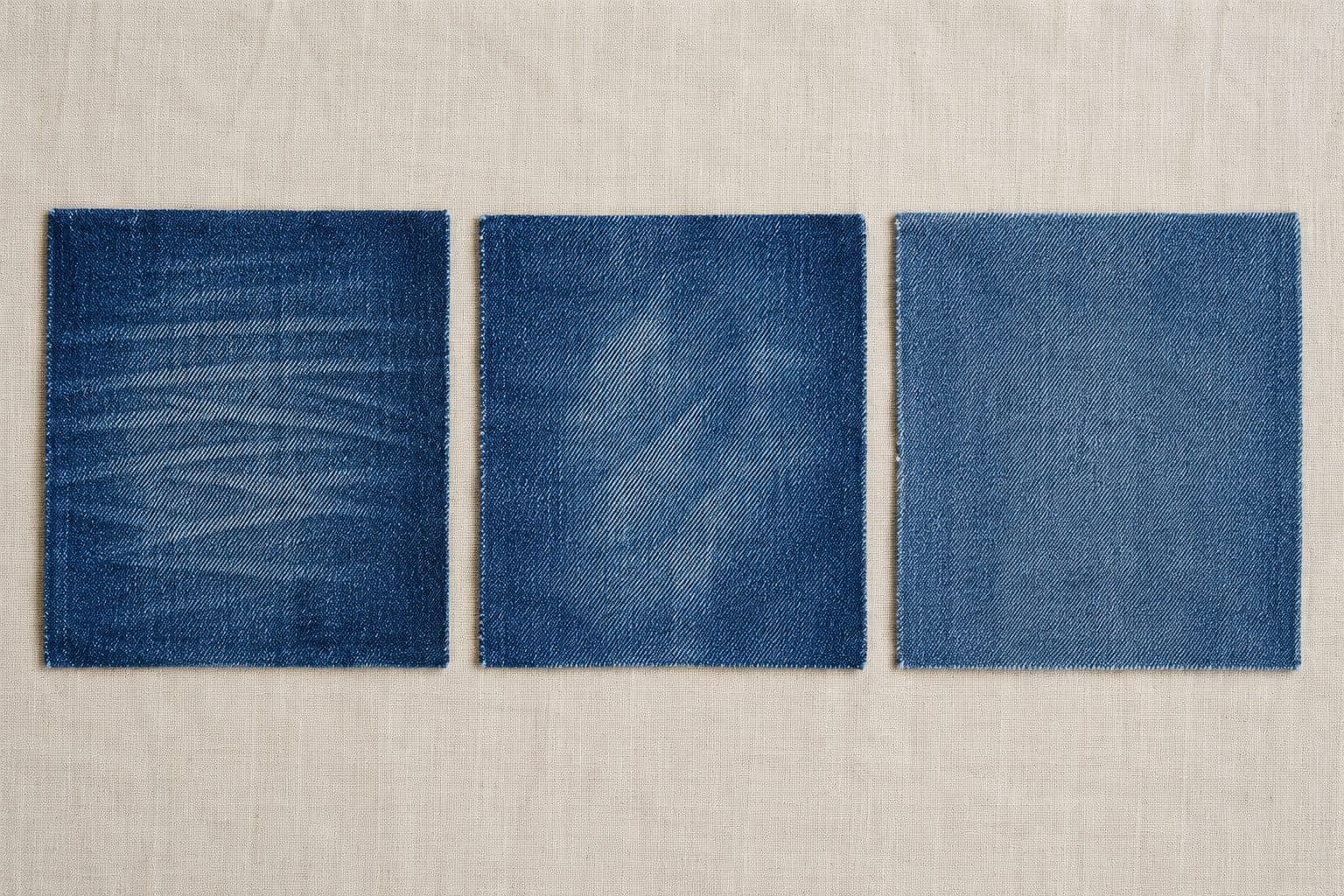
Laser etch
A fade pattern burned in with light. No airborne dust and no grit.
Hand rub
Abrasive pads worked by hand over a form, with extraction at the bench.
Enzyme wash
Cellulase in the drum softens the whole surface evenly.
Stone wash
Pumice tumbled with the garment for an uneven, slower fade.
A word we are not using yet
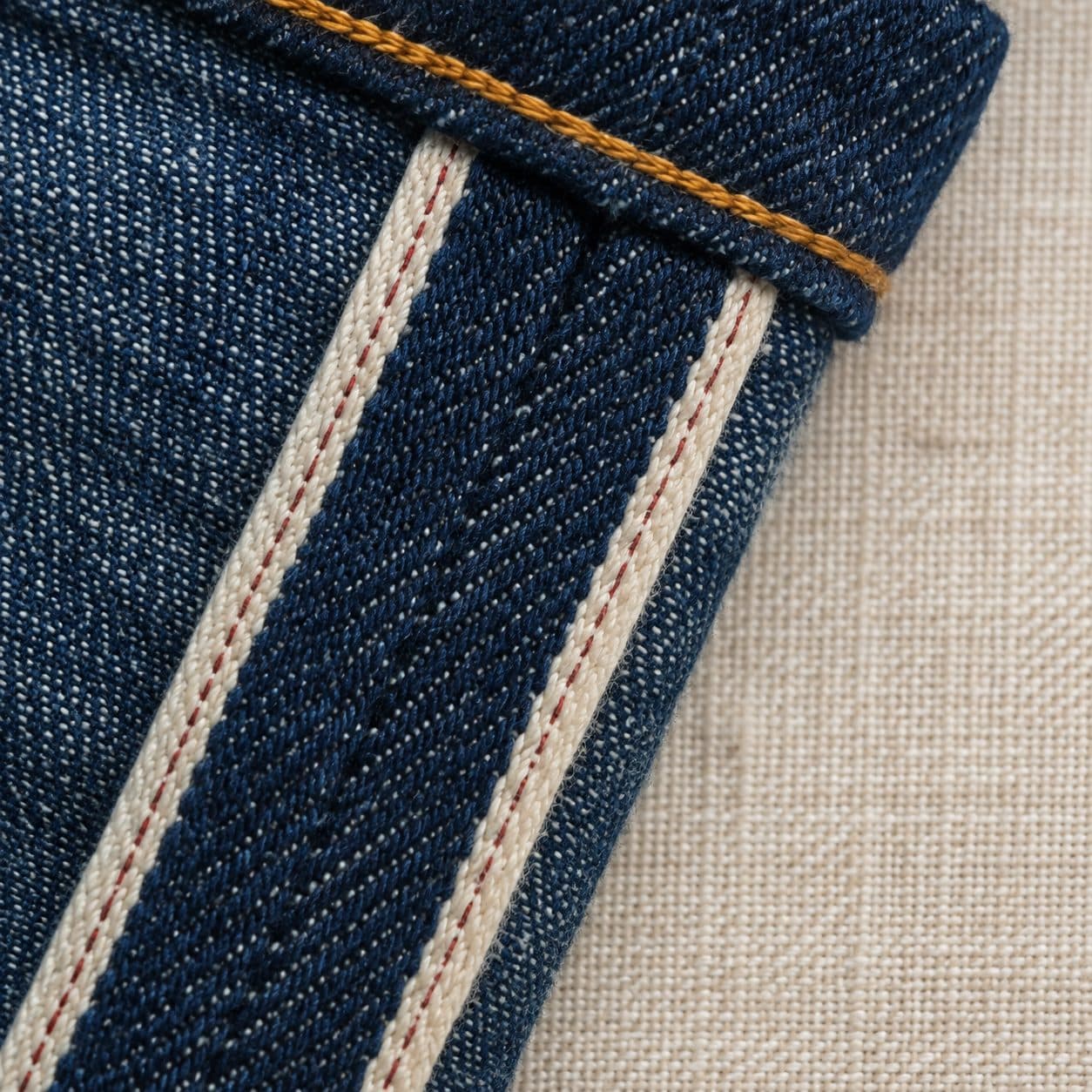
There is a trade term for cloth finished with a closed edge along the outer seam. It is one of the most abused words in this business, applied to fabric that plainly does not have it, because it adds a hundred dollars to a price tag.
Four of our heaviest unwashed styles are woven on looms that produce that edge. We have not yet received the mill certificates that would let us say so in writing. Until those documents are in our hands, those product pages state that the construction is not published, and the term appears nowhere on this site. When the paperwork arrives, the pages will change and will name the mill.
The same rule governs the word for unwashed cloth: it is used only on garments that have genuinely never been washed, which is every style in line D and one jacket in line E, and nowhere else.
If anything on this page contradicts what you were sent, the figures on the product page at the time of your order are the ones that apply. Write to us and we will send you the test record.
support@leoneabbigliamento.store